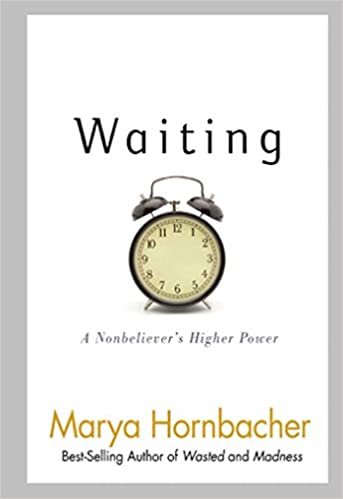
Book: Waiting: The Nonbeliever’s Higher Power

Twelve step programs can have a lot of religious overtones, and that can make people who don’t believe in the Christian god feel left out. The programs are actually meant to be “spiritual” and not religious, but even the word “spiritual” makes some of us cringe. This book is about finding the kind of spirituality that can help an addict achieve recovery, without reference to any religion, and without sounding like you are joining some sort of new age cult.

Article: The Twelve Steps: A Different View

Twelve step programs are rooted in Christianity, so they can be off-putting to people who are not Christian, or not religious. This article lists 20+ alternative ways of conceptualizing the twelve step in a non-religious way.

https://www.omagod.org/alt-steps

Facebook Group: Food Addiction Support Group

This group is not affiliated with any particular program for recovering from food addiction. It has almost 3000 members. From the group description: “This group is for anyone and everyone who is suffering from food addiction or caring for someone with food addiction.”

https://www.facebook.com/groups/328193654573615/

Book: The Little Book: A Collection of Alternative 12 Steps

Twelve step programs are rooted in Christianity, so they can be off-putting to people who are not Christian, or not religious. This book gives twenty alternative ways of thinking about the twelve steps, none of which require a belief in a “supernatural interventionist deity”. The author, Roger C., is the founder of the “We Agnostics” AA group.

Article: Before You Take that Bite

What is this?

The pamphlet “Before You Take That Bite” (https://foodaddicts.org/documents/before-you-take-that-bite) is Food Addicts in Recovery Anonymous (FA) Conference Approved Literature. It offers guidance and support for individuals struggling with food addiction, reminding them that they have a choice each day not to use food addictively. This pamphlet emphasizes the importance of abstaining from addictive eating.

How can this help me?

This pamphlet provides practical strategies for managing cravings and difficult emotions. It encourages the use of the Serenity Prayer, reminding readers that feelings are not facts. The pamphlet advises thinking through the negative consequences of eating addictively and focusing on the benefits of abstinence.

Research Paper: Food Addiction: Implications for the Diagnosis and Treatment of Overeating

Adams, R. C., Sedgmond, J., Maizey, L., Chambers, C. D., & Lawrence, N. S. (2019). Food Addiction: Implications for the Diagnosis and Treatment of Overeating. Nutrients, 11(9), 2086. https://doi.org/10.3390/nu11092086

Research Paper: Food Addiction: A Valid Concept?

Fletcher, P. C., & Kenny, P. J. (2018). Food addiction: a valid concept?. Neuropsychopharmacology : official publication of the American College of Neuropsychopharmacology43(13), 2506–2513. https://doi.org/10.1038/s41386-018-0203-9

Story: MORE!

How was it then?

I always wanted MORE. I could never feel satisfied with what I had. If something was good or enjoyable, I wanted more of it. I wanted it to never end. There is no amount that could be considered “enough”.

One more bite. Okay, just one more. Well, might as well make it an even three. Wait, three is an odd number. Better make it four. Oh, four is unlucky, so it pretty much has to be five. Okay, I have probably had enough now. But there are still some left in the bag. I should probably just finish these up.

This happened with food, but also with time (just a few more minutes) or activities that I was doing (just one more game). Whatever I was doing, I just wanted to do that thing and never stop.

~ A Food Addict

How is it now?

When I started on my program of recovery, this feeling was still very much there, so I struggled with eating just what I had committed to eating and no more. It didn’t seem like it would be enough. But after a few days of “ordered eating” (instead of disordered eating), I started to recognize what “enough” looked like and felt like. Now, I feel satisfied after my meals, and I know that there is another one coming, so that keeps the “MORE!” monster at bay.

This has carried over to the rest of my life, and now I am able to look objectively at what I am doing and come to a more rational decision about what is “enough” of any one thing. The most remarkable place that this has had an impact is with my bedtime. Because I was always chasing “more”, I always ended up staying up too late, and well past reasonable hours. Now that my food is in its right place, I can keep other things in my life in their right place too, which means that when it is time for bed, I can just get myself to go to bed without arguments. The child inside me doesn’t scream for a later bedtime every night!

~ A Recovering Food Addict