Research Paper: Adverse childhood experiences among adults with eating disorders

Summary

Adverse childhood experiences (ACEs), such as abuse, are considered a significant public health crisis and are associated with mental and physical health problems later in life. The current study compared ACEs among a treatment-seeking sample of adults with eating disorders to a nationally representative sample, and found that patients with eating disorders reported higher ACEs scores. Within the eating disorder sample, females were more likely to report a history of sexual abuse than males. Four categories of ACEs emerged, representing four distinct clusters of ACEs item endorsement. Patients with binge eating disorder (BED) reported higher levels of ACEs than patients with anorexia nervosa – restricting subtype (AN-R). In addition, patients with other specified feeding or eating disorder (OSFED) were more likely to be characterized by high levels of household dysfunction than patients with AN-R. Screening for adverse childhood experiences among patients with eating disorders should be part of standard care, and more broadly, providing children with safe environments may lessen the long-term development of several serious illnesses, including eating disorders.

Rienecke, R.D., Johnson, C., Le Grange, D. et al. Adverse childhood experiences among adults with eating disorders: comparison to a nationally representative sample and identification of trauma. J Eat Disord 10, 72 (2022). https://doi.org/10.1186/s40337-022-00594-x

 The article below explains this study in plain English.
https://www.psypost.org/2022/07/study-links-distinct-patterns-of-childhood-trauma-to-specific-eating-disorder-diagnoses-63547

Story: Just in Case

How was it then?

I was always worrying that I *might* be hungry later, so I had to have food around me at all times. If I went somewhere in my car, I would have to stop at a store to buy some food for the trip. I would usually buy junk food like chocolate or potato chips, or something I could easily eat while driving. If I was going for a longer trip, like a flight, then I would go crazy at the airport buying big bags of junk food. I said to myself, “If I’m going to die in a plane crash, at least I will have eaten chocolate.”

~ A Food Addict

How is it now?

I have a set schedule for eating my meals, so I know at any given time what time I will eat, and how much time there is until I will eat again, so there is no little voice in my head saying “what if you get hungry???”. If I get hungry, it’s probably because it is time to eat, so I will eat then. End of discussion.

I also know that my meal will be enough when the time comes to eat it, so I don’t need to come up with any “just in case” scenarios in my head that will lead me to buying and eating junk food.

~ A Recovering Food Addict

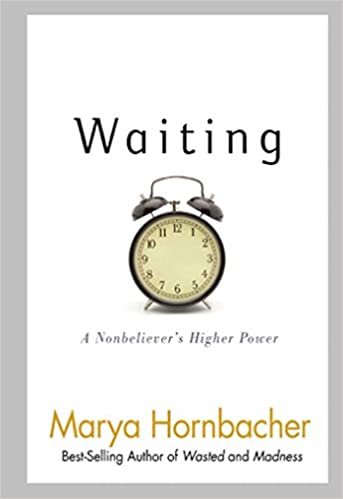
Book: Waiting: The Nonbeliever’s Higher Power

Twelve step programs can have a lot of religious overtones, and that can make people who don’t believe in the Christian god feel left out. The programs are actually meant to be “spiritual” and not religious, but even the word “spiritual” makes some of us cringe. This book is about finding the kind of spirituality that can help an addict achieve recovery, without reference to any religion, and without sounding like you are joining some sort of new age cult.

Article: The Twelve Steps: A Different View

Twelve step programs are rooted in Christianity, so they can be off-putting to people who are not Christian, or not religious. This article lists 20+ alternative ways of conceptualizing the twelve step in a non-religious way.

https://www.omagod.org/alt-steps

Facebook Group: Food Addiction Support Group

This group is not affiliated with any particular program for recovering from food addiction. It has almost 3000 members. From the group description: “This group is for anyone and everyone who is suffering from food addiction or caring for someone with food addiction.”

https://www.facebook.com/groups/328193654573615/

Book: The Little Book: A Collection of Alternative 12 Steps

Twelve step programs are rooted in Christianity, so they can be off-putting to people who are not Christian, or not religious. This book gives twenty alternative ways of thinking about the twelve steps, none of which require a belief in a “supernatural interventionist deity”. The author, Roger C., is the founder of the “We Agnostics” AA group.

Article: Before You Take that Bite

What is this?

The pamphlet “Before You Take That Bite” (https://foodaddicts.org/documents/before-you-take-that-bite) is Food Addicts in Recovery Anonymous (FA) Conference Approved Literature. It offers guidance and support for individuals struggling with food addiction, reminding them that they have a choice each day not to use food addictively. This pamphlet emphasizes the importance of abstaining from addictive eating.

How can this help me?

This pamphlet provides practical strategies for managing cravings and difficult emotions. It encourages the use of the Serenity Prayer, reminding readers that feelings are not facts. The pamphlet advises thinking through the negative consequences of eating addictively and focusing on the benefits of abstinence.

Research Paper: Food Addiction: Implications for the Diagnosis and Treatment of Overeating

Adams, R. C., Sedgmond, J., Maizey, L., Chambers, C. D., & Lawrence, N. S. (2019). Food Addiction: Implications for the Diagnosis and Treatment of Overeating. Nutrients, 11(9), 2086. https://doi.org/10.3390/nu11092086

Research Paper: Food Addiction: A Valid Concept?

Fletcher, P. C., & Kenny, P. J. (2018). Food addiction: a valid concept?. Neuropsychopharmacology : official publication of the American College of Neuropsychopharmacology43(13), 2506–2513. https://doi.org/10.1038/s41386-018-0203-9